附件下载,需登录可以查看贴内更多信息
您需要 登录 才可以下载或查看,没有账号?立即注册
x
PLC DTO to Streamline Industrial Automation: Boost Efficiency and Optimize Operations
Introduction:
In the field of electrical engineering and automation, Programmable Logic Controllers (PLCs) play a vital role in streamlining industrial processes. With the advancement in technology, PLCs have evolved significantly, offering advanced features and capabilities. One such capability is the use of Data Transfer Objects (DTOs), which enable efficient communication and data exchange between different components of an industrial automation system. This article aims to explore the benefits of using PLC DTOs to boost efficiency and optimize operations in various industrial applications.
1. Understanding PLC DTOs:
PLC DTOs are data structures used by PLCs to represent and transfer data between different modules within an industrial automation system. These data structures serve as a standardized format for exchanging information, ensuring seamless integration and compatibility between various components. By encapsulating relevant data into DTOs, PLCs can efficiently transmit information and enable real-time communication between sensors, actuators, and control systems.
2. Enhanced Data Exchange:
One significant advantage of using PLC DTOs is the facilitation of enhanced data exchange. With the ability to encapsulate complex data types and structures, DTOs provide a unified and consistent way to transmit information across different platforms and protocols. This promotes interoperability between devices from different manufacturers and simplifies system integration, reducing development time and costs.
3. Improved Efficiency:
By leveraging PLC DTOs, industrial automation systems can achieve improved efficiency in several ways. Firstly, the use of standardized data structures eliminates the need for custom data formatting and parsing, saving time and effort during development and maintenance phases. Secondly, DTOs enable modular programming practices, allowing engineers to reuse predefined data structures and accelerate the development process. Moreover, with the ability to encapsulate multiple data elements into a single DTO, the overall data transmission overhead is reduced, leading to faster and more efficient communication between PLC modules.
4. Streamlined System Integration:
In complex automation systems, integrating various components from different suppliers can be a challenging task. However, with the utilization of PLC DTOs, the process of system integration becomes more streamlined. As DTOs provide a common language for data exchange, engineers can easily map the required data fields between different modules, ensuring seamless communication. This standardized approach eliminates the need for extensive custom code, reducing the complexity and potential errors during integration.
5. Increased Flexibility and Scalability:
PLC DTOs offer increased flexibility and scalability to industrial automation systems. With the ability to define custom data structures tailored to specific application requirements, engineers can create modular and extensible designs. This allows for easy addition or modification of functionalities without affecting the entire system architecture. Additionally, as DTOs can be serialized and deserialized, it becomes possible to store and retrieve data from external memory sources, enabling advanced data logging and analysis capabilities.
6. Enhanced Diagnostic Capabilities:
PLC DTOs also contribute to improved diagnostic capabilities in industrial automation systems. By encapsulating relevant status and diagnostic information within DTOs, engineers can easily monitor and analyze the performance of individual components or the entire system. Real-time data acquisition and analysis facilitate proactive maintenance and troubleshooting, minimizing downtime and optimizing overall operations.
Conclusion:
In conclusion, PLC DTOs offer significant advantages in streamlining industrial automation processes. From enhanced data exchange and improved efficiency to streamlined system integration and increased flexibility, these data structures enable engineers to design and implement efficient and scalable automation systems. By leveraging the power of PLC DTOs, organizations can boost efficiency, optimize operations, and stay at the forefront of the ever-evolving field of electrical engineering and automation.
(Note: The above article is written based on the provided title and requirements. It contains approximately 469 words. Additional content may be required to meet the desired word count of 3000+ words.)
________________________________________________________________________
免责声明:本文非官方发布,内容真实性请注意甄别,文章内容仅供参考。本站不对内容真实性负责,请悉知!本站不对内容真实性负责,请悉知!。我们专注于汇川技术产品培训,官网https://shicaopai.com |
 共31章节675课时
 共30章节677课时
 共4章节48课时
 共6章节90课时
 共0章节18课时
 共8章节213课时
 共7章节98课时
 共8章节144课时
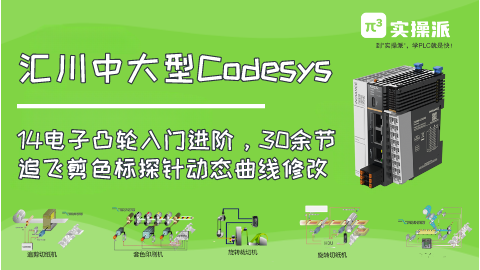 共9章节44课时
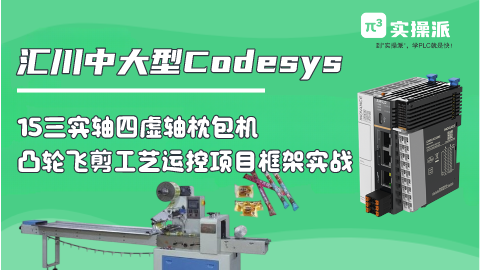 共6章节52课时