附件下载,需登录可以查看贴内更多信息
您需要 登录 才可以下载或查看,没有账号?立即注册
x
Title: A Detailed Guide on Counting with Mitsubishi PLC Input and Output Ports
Introduction:
In the field of electrical engineering and automation, Mitsubishi Programmable Logic Controllers (PLCs) are widely used for controlling and monitoring various industrial systems. One essential function of PLCs is counting, which allows for accurate measurement and control of processes. In this article, we will delve into the intricacies of counting with Mitsubishi PLC input and output ports, exploring the different counting methods and providing step-by-step guidance.
1. Understanding PLC Input and Output Ports:
PLCs consist of input and output ports that interact with the external world. Input ports receive signals from sensors, switches, or other devices, while output ports send signals to actuators, relays, or display devices. Before counting, it is crucial to configure the appropriate input and output ports in the PLC programming software, establishing a connection between the physical world and the PLC system.
2. Basic Counting Functionality:
Mitsubishi PLCs offer several counting methods to suit various applications. The basic counting function uses a single input port to count rising edges, falling edges, or both. By monitoring the state of the input signal, the PLC increments or decrements a counter value accordingly. This method is suitable for simple counting tasks with one input source.
3. High-Speed Counting:
In some scenarios, high-speed counting is required to accurately measure rapidly changing parameters, such as rotational speed or flowrate. Mitsubishi PLCs provide high-speed counting modules that enable precise counting at faster rates. These modules are capable of handling multiple input signals simultaneously and offer advanced features like interrupt-based counting and configurable pulse filters.
4. Pulse Accumulation:
In certain applications, it is necessary to accumulate pulses over a period to determine the total count within that timeframe. Mitsubishi PLCs support pulse accumulation functions, where the counter value continuously accumulates pulse counts until a specific condition is met. This technique is commonly used for metering or monitoring processes over an extended period.
5. Batch Counting:
Batch counting is a common requirement in manufacturing industries, where products are produced and packaged in fixed quantities. Mitsubishi PLCs provide specialized batch counting functions that allow for accurate tracking of the number of items produced. This feature ensures efficient production control and quality assurance.
6. Combining Counters with Logic Functions:
To enhance the counting functionality, Mitsubishi PLCs offer the ability to combine counters with logic functions. This allows for complex counting scenarios, such as counting only when certain conditions are met or implementing count-based control strategies. By utilizing logic functions like timers and comparators, engineers can create sophisticated counting applications tailored to specific requirements.
Conclusion:
Counting is a fundamental aspect of many industrial processes, and Mitsubishi PLCs provide a range of capabilities to meet diverse counting needs. Understanding the various counting methods, including basic counting, high-speed counting, pulse accumulation, and batch counting, allows engineers to utilize Mitsubishi PLCs effectively. By combining counters with logic functions, engineers can implement advanced counting applications with precision and flexibility. With Mitsubishi PLCs' reliable performance and extensive feature set, electrical engineers can optimize processes, improve productivity, and ensure efficient automation in various industries.
________________________________________________________________________
免责声明:本文非官方发布,内容真实性请注意甄别,文章内容仅供参考。本站不对内容真实性负责,请悉知!本站不对内容真实性负责,请悉知!。我们专注于汇川技术产品培训,官网https://shicaopai.com |
 共31章节675课时
 共30章节677课时
 共4章节48课时
 共6章节90课时
 共0章节18课时
 共8章节213课时
 共7章节98课时
 共8章节144课时
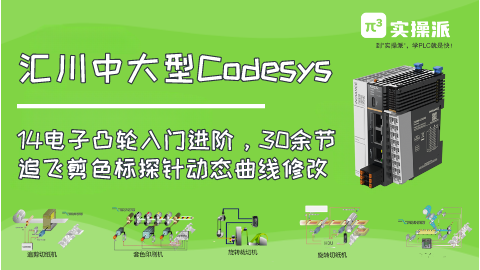 共9章节44课时
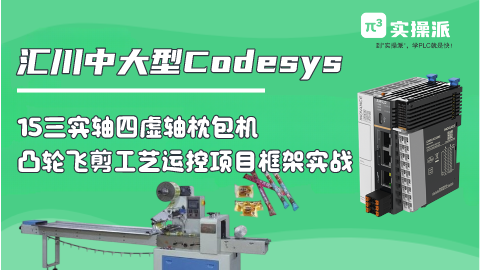 共6章节52课时